How an Engineering Firm Got an AI Roadmap for €1,000
At a Glance
This case study shows what an AI readiness assessment looks like in practice for a precision engineering firm based in Munster.
The Capacity Problem: When You Cannot Hire Fast Enough
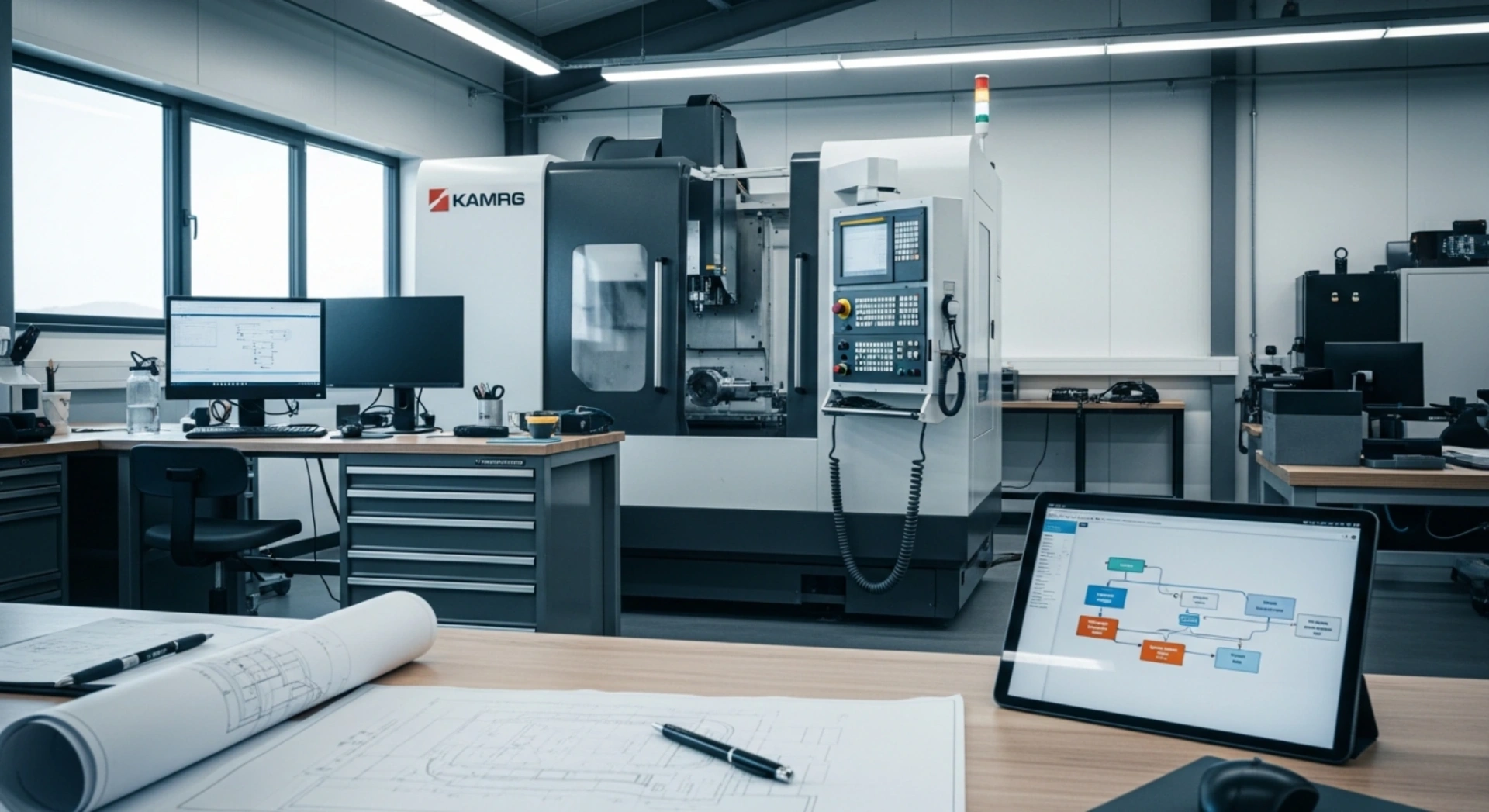
A precision engineering firm based in Munster with approximately 45 employees was growing faster than it could hire. A strong client pipeline, a solid reputation built over decades, and a team that was stretched. The constraint was not demand. It was delivery capacity.
Engineers were spending a significant portion of their working week on tasks that were necessary but not billable design work. Reviewing specifications against compliance standards. Cross-referencing design documents against building regulations. Compiling project documentation packages. Checking submissions from subcontractors against contract requirements. The same patterns, repeated across dozens of projects every week.
For professional services firms where revenue depends on headcount, this is the fundamental bottleneck. The more time engineers spend on repetitive compliance and documentation tasks, the lower the team's effective utilisation on billable design work. Hiring more engineers only scales the problem unless the underlying workflows change.
The MD had explored some off-the-shelf AI tools for individual staff members, but the results were mixed. What he wanted was a structured AI readiness assessment of where AI could free up capacity across the entire engineering team. He also wanted an honest answer, not a sales pitch from an AI vendor with a product to sell.
The AI Discovery: What €1,000 Gets You
An Enterprise Ireland Digital Discovery is a grant-funded AI assessment that helps established businesses identify practical AI use cases, estimate the ROI, and plan implementation before committing to a larger build. It typically costs €5,000, with Enterprise Ireland covering 80%. Over eight weeks, a consultant analyses your workflows, your data, and your team's time, and produces a prioritised roadmap of AI opportunities with estimated ROI for each.
The company qualified for this programme. Brian Egan of Deep Purple AI Consulting, with over 26 years in software and AI, led the consulting engagement. Over eight weeks, we:
Visited the offices and spent time with the engineering teams, observing how they actually worked
Interviewed stakeholders across engineering disciplines and project coordination
Mapped the workflows that consumed the most non-billable time
Assessed the data landscape: what systems were in use, what formats data was in, and how clean it was
Identified 5 AI opportunities, estimated the ROI for each, and ranked them by impact and feasibility
Our approach to AI consulting is deliberately broad. We did not arrive with a solution looking for a problem. We started with how the team actually worked and worked backward to where AI could make a measurable difference.
5 AI Use Cases for Engineering, Ranked by ROI
We identified five specific areas where AI could reduce the time engineers spent on repetitive tasks. Without disclosing the client's proprietary findings, the use cases covered:
Document processing and specification review: The largest opportunity. AI-assisted extraction and cross-referencing of incoming specifications against design standards, projected to save 6–8 hours per engineer per week.
Compliance checking against building regulations: Automated flagging of non-compliance, freeing engineers to focus on resolution rather than detection.
Project coordination and reporting: Automated report generation from existing project data, eliminating several hours of manual compilation per project per week.
Submittal and RFI processing: AI pre-screening of subcontractor submissions against contract requirements, flagging items that needed engineering attention.
Knowledge management and precedent search: An internal search system trained on completed project documentation, surfacing relevant precedents in seconds.
| Use case | Time-saving potential | Feasibility | Implementation window |
|---|---|---|---|
| Document processing and spec review | High | High | 8–12 weeks |
| Compliance checking | Medium-High | Medium | 10–16 weeks |
| Reporting automation | Medium | High | 6–10 weeks |
| Submittal and RFI pre-screening | Medium | Medium | 8–14 weeks |
| Knowledge search | Medium | Medium | 10–16 weeks |
These projections were based on observed workflow samples, stakeholder interviews, and time estimates gathered during the Discovery, not generic benchmarks.
We assessed data formats, system APIs, document structures, and existing automation capabilities across the engineering team's daily workflows. For the highest-priority use case — automated specification extraction — we tested sample documents against NLP models to validate feasibility and estimate accuracy before projecting ROI.
What the AI Assessment Delivered
The deliverable was not a slide deck. It was a comprehensive AI Opportunity Assessment and Implementation Roadmap:
5 AI use cases with estimated ROI, feasibility ratings, and implementation complexity
A prioritised roadmap with three horizons: quick wins (4–8 weeks), medium-term (3–6 months), and long-term transformation
Budget estimates for each use case, including grant funding pathways
A data readiness assessment identifying what was usable immediately and what needed restructuring
An executive presentation delivered to the leadership team
The Discovery stands alone. There is no obligation to proceed to implementation.
"What surprised me was how specific it was. I expected a generic report about AI. Instead we got five concrete opportunities with actual numbers — hours saved, costs to implement, grants available. It was a business case, not a technology pitch."
What This Meant for the Business
The roadmap gave the management team something they hadn't had before: a clear, evidence-based view of where AI could make a difference in their business.
- Confidence to invest. Before the discovery, the MD knew something needed to change but wasn't sure whether AI was the right tool or just another expensive distraction. The roadmap gave a specific, costed answer — five use cases ranked by projected ROI, with the top opportunity validated against real data. That made the board decision straightforward.
- A practical starting point, not a large-scale programme. The biggest risk with AI for a 45-person engineering firm is over-committing to a large project that destabilises operations. The discovery identified a focused first project — automated specification extraction — that could be built and tested without changing how the team works day-to-day. A contained starting point with a clear payback.
- Grant funding confirmed before committing to a build. The discovery confirmed eligibility for Enterprise Ireland build-phase funding at 50%, which halved the investment required for the first implementation. The company knew exactly what the next step would cost before deciding whether to proceed.
Grant Funding: From €1,000 to Full Implementation
| Enterprise Ireland Digital Discovery | |
| Total cost | €5,000 |
| Enterprise Ireland funding (80%) | €4,000 |
| Client investment | €1,000 |
All prices ex-VAT.
Enterprise Ireland Digital Discovery is generally available to Enterprise Ireland client companies with 10 or more employees, subject to current programme criteria. LEO offers a similar programme for smaller businesses.
If the client proceeds to implementation, Enterprise Ireland's Digital Process Innovation programme covers up to 50% of implementation costs, up to €150,000. The Discovery findings and roadmap form the basis of the implementation grant application. We handle the technical documentation.
The funding pathway is designed so that each step de-risks the next. You do not commit to a €50,000–€100,000 build until you have a €1,000 assessment telling you exactly what to build and why.
What Happened Next
The company is reviewing the roadmap and evaluating which use cases to implement first. We are working with them to prepare the Enterprise Ireland grant application for the first implementation phase. The Discovery findings form the core of that application.
The assessment also surfaced data quality issues that the company is addressing in parallel, so the foundation is ready when implementation begins.
While this engineering firm focused on documentation workflows, other Irish businesses use the same Discovery process for quoting, scheduling, and quality control — see how a building services company cut quoting time by 80%.
Frequently Asked Questions
Is an AI Discovery Right for Your Business?
An AI Discovery engagement works best if:
- Your revenue is tied to headcount and you cannot hire fast enough to meet demand
- Your team spends significant time on repetitive documentation, compliance, or coordination tasks
- You are curious about AI but want an independent, honest assessment before committing to anything
The same Discovery approach also applies to other professional services businesses where revenue depends on experienced staff and repeatable knowledge work.
If that sounds familiar, the Discovery is the place to start.
Start with a 20-Minute Conversation
No pitch, no pressure. Just an honest look at whether an AI Discovery could help your business.
See how our 4-step process works →
About Brian Egan
Founder & CEO, Deep Purple AI Consulting
Brian Egan is the Founder and CEO of Deep Purple AI Consulting. With over 26 years in software and AI, from studying neural networks at Dublin City University, to building intelligent mobile systems for Vodafone, Nokia and Hutchison 3G, to building technology companies that delivered machine learning, computer vision and predictive AI solutions to real businesses, Brian has been building with AI technologies at every stage of their evolution.
His interest in artificial intelligence began at DCU, where he studied neural networks and pattern recognition as part of his BSc in Computer Applications. As a Marie Curie Research Fellow in Germany, he worked on EU Framework projects developing intelligent systems for integrating emerging mobile technologies with enterprise software. At Cibenix (2003 to 2011), he spent eight years designing on-device software for Vodafone, Nokia, Hutchison 3G, Sony Ericsson and other global operators, work that increasingly involved content personalisation, user behaviour analysis and adaptive delivery logic.
In 2012, Brian founded Purpledecks, a software consultancy that incorporated machine learning, computer vision, data classification, predictive features and recommendation engines into client projects years before the current generative AI wave. From Purpledecks came Hype4 (UX research including AI-powered biometric identification for government programmes) and Reactable AI, the Deep Purple team's own agent product, funded by Enterprise Ireland's Pre-Seed Start Fund, with a new version launching September 2026.
A former Marie Curie Research Fellow, Brian leads Deep Purple's work with established businesses across Ireland, the UK, the EU, and the US, helping them identify where AI delivers genuine commercial value and guiding them from first assessment through to working system.
Deep Purple AI Consulting (deeppurple.ai) is an AI consultancy and custom software development company based in Longford, Ireland, serving clients across Ireland, the UK, the EU, and the US. We help established businesses identify where AI can make a real difference, then build the systems to make it happen.